Transforming Tanks with Spun Aluminum The Benefits of Metal Spinning
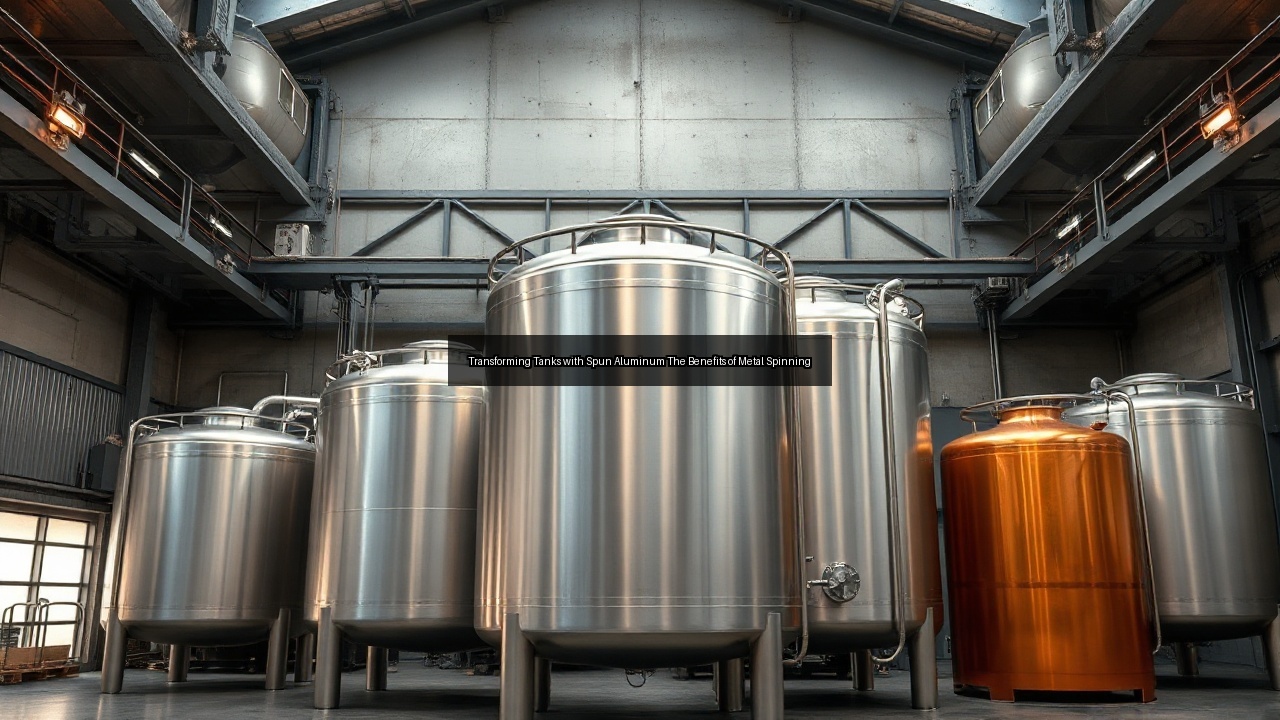
Introduction to Spun Aluminum and Its Applications
Overview of Spun Aluminum
Spun aluminum delivers precision-formed components that reshape how manufacturers approach tank construction. Workers start with flat aluminum discs and apply controlled force through a spinning lathe to create seamless shapes. This method produces uniform walls without welds or joints that often fail under pressure. Spun aluminum tanks resist corrosion better than many alternatives because the process preserves the metal's natural oxide layer. Engineers value the resulting symmetry for even stress distribution during filling and transport. Industries from chemical storage to food processing now specify spun aluminum for its clean finish and reliable performance. The technique also supports custom diameters and depths without expensive tooling changes.
Spun metal aluminum parts maintain tight tolerances that reduce assembly time on production lines. Fabricators rotate the workpiece while pressing rollers against it to stretch and thin the material evenly. This yields lightweight yet rigid structures ideal for mobile tanks mounted on vehicles. Recent advances allow thicker starting blanks to reach final dimensions without cracking. Operators monitor temperature and speed closely to avoid work hardening that could compromise the alloy. Spun aluminum alloys such as 3003 and 5052 dominate because they balance formability with strength after annealing cycles.
Common Applications in Tank Manufacturing
Tank builders rely on spun aluminum for pressure vessels, fuel containers, and hydraulic reservoirs. The seamless construction eliminates leak paths that plague riveted or welded designs. Chemical plants choose these tanks to hold acids and solvents because aluminum resists many corrosives without additional coatings. Agricultural operations use spun aluminum tanks for fertilizer and water storage due to their low weight and easy cleaning. Fire suppression systems incorporate spun aluminum spheres that deploy quickly from aircraft. Each application benefits from the metal spinning process's ability to create complex contours in a single operation.
Automotive and aerospace sectors adopt aluminum metal spun tanks for fuel and coolant systems where vibration resistance matters. The process accommodates integral flanges and mounting bosses without secondary machining. Marine manufacturers spin aluminum for ballast and fresh water tanks that endure saltwater exposure. Food-grade tanks produced this way meet sanitary standards because smooth interiors prevent bacterial buildup. Custom orders for large-diameter spinnings reach 120 inches across while keeping wall thickness consistent. These tanks often replace heavier steel versions to improve payload capacity on trucks and trailers.
The Metal Spinning Process Explained
Understanding Metal Spinning
Metal spinning transforms flat sheets into hollow rotational shapes through progressive deformation. A mandrel supports the aluminum blank while rollers apply localized pressure to flow the metal outward. Multiple passes refine the contour until the part matches the template. Operators adjust feed rates and roller angles to control thinning and prevent wrinkles. The metal spinning process works cold or with mild heat to improve ductility in harder alloys. Finished parts require minimal trimming because excess material flows into the design intentionally. This flexibility supports prototypes and low-volume runs efficiently.
Spinning aluminum alloy requires precise control of chuck speed and lubrication to maintain surface quality. CNC machines now automate roller paths for repeatable results across batches. Manual spinning still excels for one-off pieces where operators feel material response directly. Both approaches produce parts with excellent grain flow that enhances fatigue life compared to cast alternatives. Spun Al components often undergo solution heat treatment afterward to restore full mechanical properties. The technique handles diameters from a few inches to several feet without major equipment changes.
Comparison with Metal Stamping
Metal stamping presses flat blanks into dies under high tonnage, which limits depth and often requires multiple stations. Spinning achieves deeper draws in one setup because the metal flows continuously rather than stretching abruptly. Stamping creates sharp corners that concentrate stress, whereas spinning produces smooth radii that improve durability. Tooling costs drop dramatically with spinning since only a simple mandrel is needed instead of matched punch and die sets. Production volumes under a few thousand units favor spinning for economic reasons. Stamping remains faster for shallow, high-volume parts but struggles with the complex curves common in tank ends.
Spun aluminum tanks avoid the thinning and cracking risks that stamping encounters on deeper forms. The spinning method work-hardens the material progressively, increasing strength without extra processing. Stamping can introduce springback that requires compensation in die design, adding development time. Fabricators switch between the two processes based on part geometry and annual quantity. Many tank producers now combine both: stamp flat sections and spin the ends for hybrid efficiency. This hybrid approach reduces overall weight while controlling costs on mixed production schedules.
The Role of Spinning in Tank Production
Spinning integrates early in tank fabrication by forming heads, shells, and baffles from single blanks. These components weld together with fewer seams than stamped equivalents, cutting inspection time. The process allows integrally formed flanges that speed attachment of fittings and manways. Tank designers specify spinning when weight savings directly affect vehicle range or payload. Production lines sequence spinning cells before welding stations to maintain flow. Quality teams verify concentricity and wall thickness at each spinning station to catch deviations immediately.
Metal spinning supports rapid design iterations because mandrel changes take hours rather than weeks. Engineers test new tank geometries without committing to expensive stamping dies. Large tanks for industrial use often feature spun aluminum bottoms paired with rolled shells for optimal cost and performance. The process scales from laboratory prototypes to full-size production tanks exceeding 500 gallons. Consistent results across runs reduce scrap rates and improve material utilization compared to older forming methods.
Advantages of Using Spun Aluminum in Tanks
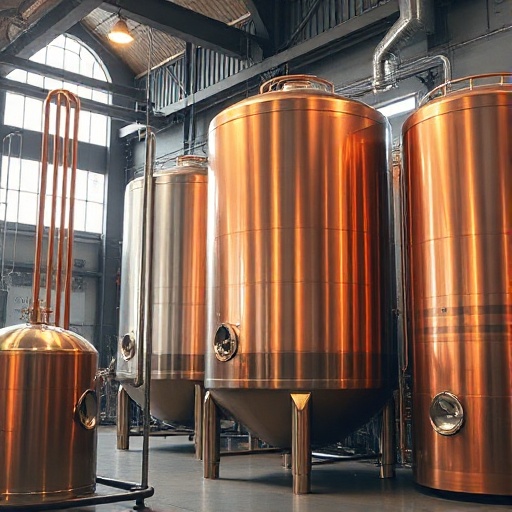
Lightweight Properties and Benefits
Spun aluminum tanks weigh roughly one-third as much as equivalent steel versions, directly lowering transportation costs and fuel consumption. Vehicle-mounted tanks benefit from this reduction through improved handling and increased payload capacity. The low density of aluminum combined with spinning's ability to maintain thin yet strong walls creates an optimal strength-to-weight ratio. Engineers calculate that every kilogram saved in tank mass extends electric vehicle range by measurable margins. Lightweight tanks also simplify installation in tight equipment bays where cranes or lifts prove impractical.
Spun aluminum alloys retain sufficient rigidity despite reduced mass because the forming process aligns grain structure favorably. Mobile tanks experience fewer fatigue failures from road vibration thanks to this inherent toughness. Operators report easier maneuvering of lightweight tanks during maintenance or relocation. The weight advantage compounds when tanks include integral mounting features spun directly into the design. Overall system efficiency rises when aluminum replaces heavier metals without sacrificing volume or pressure ratings.
Cost-Effectiveness of Spun Aluminum
Spun aluminum reduces material waste because the process starts with near-net blanks and flows excess into the part rather than trimming large amounts. Tooling expenses stay low since mandrels cost far less than stamping dies and last for thousands of cycles. Short production runs become viable without amortization penalties that stamping imposes. Labor costs drop when fewer welds and inspections are required on seamless spun components. Inventory carrying costs fall because spinning supports just-in-time manufacturing of varied tank sizes from standard stock.
Long-term ownership expenses decline with spun aluminum tanks due to corrosion resistance that eliminates frequent replacements. Energy costs for forming remain modest because spinning operates at room temperature in most cases. Fabricators pass savings to customers through competitive pricing on custom orders. The process also accommodates design changes mid-production without retooling delays that inflate budgets. Overall project economics favor spun aluminum whenever weight, corrosion, or customization drive the specification.
Durability and Strength of Aluminum Alloys
Spun aluminum alloys such as 5052-H32 deliver yield strengths above 28 ksi while resisting pitting in harsh environments. The spinning operation work-hardens the material, boosting fatigue resistance critical for pressurized tanks. Proper post-spin annealing restores ductility where needed for further assembly operations. Tanks withstand repeated pressure cycles without developing cracks because the seamless structure eliminates weld heat-affected zones. Aluminum's natural oxide film provides ongoing protection even after minor surface abrasion during service.
Impact resistance improves in spun aluminum tanks because the formed metal absorbs energy through plastic deformation rather than brittle fracture. Temperature extremes from arctic cold to desert heat affect aluminum less severely than many competing materials. Alloy selection allows tuning of strength versus formability for each tank application. Quality spinning shops track hardness and elongation on every batch to ensure consistent performance. These properties combine to give spun aluminum tanks decades of reliable service with minimal maintenance.
Exploring Other Metals: Spun Aluminum vs. Alternatives
Comparison with Copper and Other Metals
Copper offers superior thermal conductivity but costs significantly more and weighs nearly three times as much as aluminum for the same volume. Spun copper tanks suit specialized heat-transfer applications yet rarely justify the premium in standard storage roles. Stainless steel provides excellent corrosion resistance but demands heavier gauges and more complex welding procedures. Spun aluminum competes effectively by delivering adequate corrosion performance at lower weight and cost. Brass and bronze see limited tank use due to even higher material prices and forming difficulties.
Spun aluminum alloys outperform mild steel in atmospheric exposure without coatings while remaining easier to form. Titanium offers unmatched strength-to-weight but requires specialized spinning equipment and commands extreme pricing. Fabricators evaluate each metal against service conditions, expected lifespan, and total installed cost. Aluminum wins most general tank applications because it balances these factors without over-engineering. Copper and other metals remain niche choices when conductivity or specific chemical compatibility dictates the selection.
Environmental Benefits of Aluminum
Aluminum recycling consumes only five percent of the energy needed for primary production, making spun aluminum tanks highly sustainable at end of life. Manufacturers increasingly source recycled content that maintains alloy performance while lowering embodied carbon. The lightweight nature of spun aluminum tanks reduces transportation emissions throughout the supply chain. No toxic coatings or heavy metals enter the forming process, simplifying waste handling. At disposal, aluminum retains value as scrap and re-enters production streams quickly.
Spinning generates minimal scrap compared to machining or stamping, further improving material efficiency. Water-based lubricants used during spinning break down naturally and require less treatment than oil-based alternatives. Tank users benefit from lower lifetime energy consumption when lightweight aluminum replaces steel in mobile applications. The closed-loop recyclability of aluminum supports corporate sustainability goals without performance trade-offs. These environmental advantages strengthen the case for spun aluminum in new tank projects across industries.
Future Trends in Metal Spinning Technology
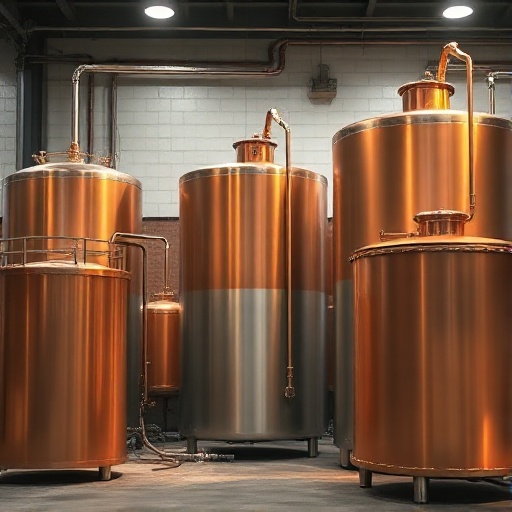
Innovations in Spinning Aluminum Alloys
New aluminum alloys developed for spinning exhibit improved elongation and reduced springback during forming. Researchers test nano-particle reinforcements that increase strength while preserving the ductility needed for deep draws. Automated vision systems now inspect spun aluminum tanks in real time for surface defects and thickness variations. Hybrid spinning machines combine laser heating with mechanical rollers to form harder alloys previously considered unworkable. These advances expand the range of tank designs possible in aluminum without added cost or weight.
Simulation software predicts metal flow during the metal spinning process, allowing engineers to optimize blank sizes and roller paths before cutting material. Additive manufacturing produces custom mandrels faster and cheaper than traditional machining. Spun aluminum alloys tailored for cryogenic service now appear in specialized tanks for liquefied gases. Continuous process monitoring feeds data into machine learning models that adjust parameters on the fly for consistent quality. These innovations keep spun aluminum competitive against emerging composite tank materials.
The Impact of Technology on Cost Efficiency
Robotic spinning cells operate around the clock with minimal supervision, slashing labor costs per tank. Predictive maintenance on spinning equipment prevents unplanned downtime that previously disrupted production schedules. Digital twins of the metal spinning process let planners test new tank geometries virtually and avoid costly physical trials. Integrated ERP systems track material usage and cycle times to identify efficiency gains immediately. These technologies compress lead times from weeks to days for custom spun aluminum orders.
Energy-efficient motors and variable-speed drives on spinning lathes reduce power consumption during forming operations. Automated material handling cuts handling damage and associated scrap rates. Cloud-based analytics compare performance across multiple spinning lines to standardize best practices. As these tools mature, the cost advantage of spun aluminum over alternative forming methods widens further. Manufacturers who adopt the latest spinning technology capture larger market share through faster delivery and tighter pricing.