Future Trends in Ertalyte Machining and Manufacturing Innovations
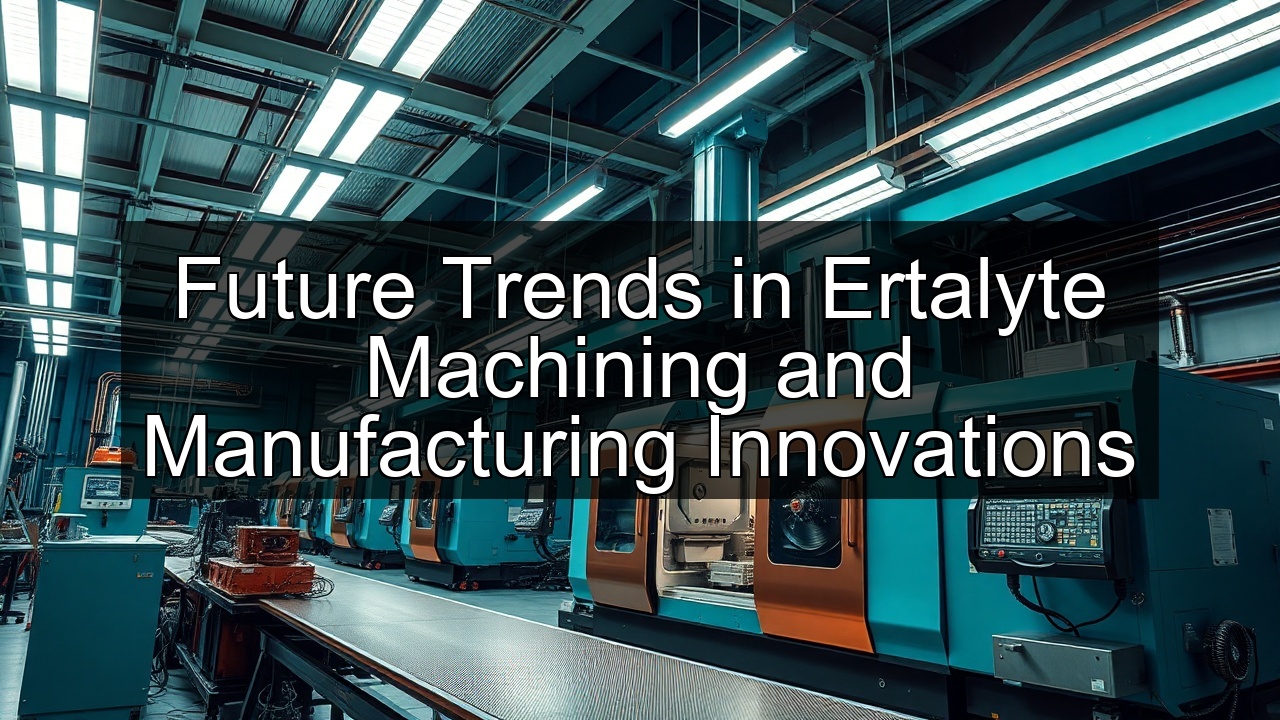
Innovations in Ertalyte Machining Technologies
Advancements in CNC Machining for Ertalyte
CNC machining stands at the forefront of ertalyte machining innovations, delivering superior precision and efficiency. Modern CNC machines have evolved to accommodate the unique properties of ertalyte, a high-performance thermoplastic derived from polyethylene terephthalate (PET). Machinists can now utilize advanced software that optimizes cutting paths, ensuring minimal waste and enhanced accuracy. These machines often incorporate adaptive feed rates, which adjust in real-time based on the material's response during machining. This technology drastically reduces cycle times while maintaining the integrity of the finished product.
Furthermore, the integration of multi-axis capabilities in CNC systems enables complex geometries to be machined effortlessly. With the ability to produce intricate parts with tight tolerances, manufacturers can cater to specific requirements in industries such as aerospace and automotive. The trend towards using high-speed spindles also plays a crucial role in reducing machining times, making it feasible to produce custom ertalyte parts in high volumes without sacrificing quality.
Automation in Ertalyte Manufacturing
Automation transforms ertalyte manufacturing by streamlining processes and minimizing human error. Robotic arms and automated guided vehicles (AGVs) now assist in material handling, allowing for seamless transitions between different stages of production. This shift not only enhances efficiency but also ensures a safer working environment, as robots take over repetitive and hazardous tasks.
Integrating automation with IoT technology enables real-time monitoring of production lines. Manufacturers can track machine performance, detect anomalies, and predict maintenance needs before issues arise. This predictive maintenance reduces downtime and prolongs the lifespan of machining equipment. Ertalyte machining services that adopt automation will likely see a significant boost in productivity, thereby positioning themselves favorably in a competitive market. The push towards automated systems also opens doors for smaller companies to compete effectively, as the initial investment in technology becomes more accessible.
Cutting Techniques for Enhanced Precision
Cutting techniques play a pivotal role in the successful machining of ertalyte. The unique characteristics of this thermoplastic require specialized tools and methods to achieve the desired finish and dimensional accuracy. Techniques such as laser cutting and waterjet cutting are gaining popularity, as they provide clean edges and reduce the risk of thermal damage to the material.
Machinists are increasingly turning to solid lubricant coatings on cutting tools to enhance performance. These coatings reduce friction, leading to lower tool wear and improved surface finishes. Additionally, employing the right cutting speeds and feeds is critical when machining ertalyte to prevent melting and ensure a smooth operation. As manufacturers explore innovative cutting methods, they establish benchmarks for quality that elevate the standards within the industry.
Ertalyte Applications Across Industries
Uses in the Automotive Sector
The automotive sector has embraced ertalyte for various applications due to its exceptional mechanical properties and lightweight nature. Components such as gears, bearings, and bushings benefit from ertalyte’s reduced friction properties, which enhance performance and durability. The low coefficient of friction associated with this thermoplastic allows for smooth operation in high-load conditions, making it ideal for automotive parts that require longevity and reliability.
Additionally, ertalyte’s resistance to wear and chemicals makes it suitable for fuel system components and engine parts, where exposure to various fluids is common. Manufacturers appreciate the ease of machining ertalyte, allowing for the production of complex shapes that meet stringent automotive standards. As the industry shifts towards more sustainable practices, the lightweight nature of ertalyte contributes to overall fuel efficiency, making it a preferred choice for modern vehicles.
Ertalyte's Role in Aerospace Engineering
Aerospace engineering relies heavily on materials that can withstand extreme conditions, and ertalyte fits this need perfectly. Its excellent dimensional stability and low moisture absorption make it suitable for applications in aircraft components, where precision and reliability are paramount. Ertalyte is often used in manufacturing lightweight structural parts, which contribute to improved fuel efficiency and performance in aircraft design.
The aerospace industry also values ertalyte for its thermal stability and resistance to deformation at elevated temperatures. These properties ensure that components maintain their integrity under the high-stress conditions experienced during flight. Additionally, the use of ertalyte in various insulation applications, where thermal and electrical resistance is critical, showcases its versatility. As aerospace technology continues to advance, the demand for high-performance materials like ertalyte is expected to grow.
High-Performance Plastics: A Comparison with PEEK and Nylon
Ertalyte stands out in the realm of high-performance plastics, often compared with materials like PEEK and nylon. While PEEK offers superior thermal resistance and chemical stability, ertalyte excels in machinability and cost-effectiveness. In applications where intricate machining is required, ertalyte provides a balance of performance and affordability that makes it an attractive option for manufacturers.
Nylon, while a popular choice in many industries, lacks the dimensional stability and load-bearing capacity ertalyte custom machining that ertalyte provides. The tensile modulus of ertalyte surpasses that of nylon, making it a better fit for applications involving heavy loads and stress. Manufacturers often choose ertalyte over these alternatives when seeking a thermoplastic that combines ease of machining with high-performance characteristics.
Material Properties and Their Impact on Machining
Understanding the Tensile Modulus of Ertalyte
The tensile modulus is a crucial property that defines the stiffness of a material, and ertalyte exhibits impressive values in this regard. This characteristic not only allows for reliable performance under mechanical stress but also enhances the material’s machinability. A higher tensile modulus means that machinists can produce parts that retain their shape and functional integrity even under significant loads.
Understanding the tensile modulus of ertalyte aids manufacturers in selecting the right applications. For example, in automotive and aerospace sectors, where components experience varying degrees of stress, ertalyte's mechanical properties ensure that the parts will not warp or deform. This reliability translates into reduced maintenance costs and improved safety, making ertalyte a preferred choice for critical applications.
Comparative Analysis of Ertalyte and Other Thermoplastics
When comparing ertalyte with other thermoplastics, its unique set of properties becomes evident. While materials like polycarbonate and PEEK offer exceptional thermal and chemical resistance, ertalyte shines in terms of machinability and cost. The efficiency of the machining process significantly impacts production timelines and costs, positioning ertalyte as a smart choice for manufacturers aiming to balance quality with affordability.
Additionally, ertalyte provides superior dimensional stability compared to many other thermoplastics. This stability reduces the risk of post-machining warping or distortion, which can occur in materials like nylon. As industries increasingly prioritize precision and consistency, ertalyte’s advantages become more pronounced, making it an essential material in modern manufacturing practices.
Thermal and Chemical Resistance of Ertalyte
Ertalyte’s thermal and chemical resistance makes it suitable for a wide range of applications, especially in environments where exposure to harsh conditions occurs. The material maintains its mechanical properties under varying temperatures, ensuring that components do not fail prematurely. This resilience is particularly valuable in industries such as automotive and aerospace, where safety and reliability are critical.
Furthermore, ertalyte resists a variety of chemicals, including fuels, oils, and solvents, making it ideal for parts that encounter aggressive substances. The material’s ability to withstand accelerated aging ensures that it remains functional and robust over time. This characteristic minimizes the need for frequent replacements, contributing to cost savings for manufacturers and end-users alike.
Future Trends in Ertalyte Machining
Sustainable Practices in Ertalyte Production
Sustainability is becoming a driving force in manufacturing, and ertalyte production is no exception. Companies are increasingly focused on reducing their environmental footprint by implementing greener practices throughout the manufacturing process. This includes optimizing energy consumption in machining operations and sourcing raw materials responsibly.
Recycling initiatives for thermoplastics like ertalyte are also gaining traction. Manufacturers are exploring ways to reclaim and reuse scrap material generated during machining processes, minimizing waste. These sustainable practices not only benefit the environment but also enhance the brand image of companies committed to responsible manufacturing.
Emerging Trends in Custom Ertalyte Parts
The demand for custom ertalyte parts is on the rise, driven by the need for tailored solutions across various industries. Advanced machining technologies allow for the production of highly specialized components that meet specific design criteria. Manufacturers are leveraging 3D printing alongside traditional machining methods to create complex geometries that were previously challenging to achieve.
Customization enables companies to respond swiftly to market demands, providing unique solutions that enhance product performance. As industries increasingly require bespoke components, the trend towards custom ertalyte parts will continue to grow, reinforcing the material’s place in modern manufacturing.
The Future of Ertalyte in High-Performance Applications
The future of ertalyte in high-performance applications looks promising, especially as industries seek materials that offer a combination of strength, durability, and machinability. Research and development in polymer science will likely yield innovations that enhance the properties of ertalyte, expanding its applications in sectors such as aerospace, automotive, and beyond.
As manufacturers continue to embrace advanced machining technologies and sustainable practices, ertalyte will remain a key player in the landscape of high-performance plastics. Its adaptability to various applications ensures that it meets the evolving needs of industries focused on innovation and efficiency.